Deprecated: Creation of dynamic property ET_Core_HTTPInterface::$expects_json is deprecated in /home/hda3vbvpsheo/public_html/indianhandicraftstore.com/wp-content/themes/Divi/core/components/HTTPInterface.php on line 305

Deprecated: Creation of dynamic property ET_Core_HTTPInterface::$owner is deprecated in /home/hda3vbvpsheo/public_html/indianhandicraftstore.com/wp-content/themes/Divi/core/components/HTTPInterface.php on line 307

Deprecated: Creation of dynamic property ET_Core_API_Spam_ReCaptcha::$data_utils is deprecated in /home/hda3vbvpsheo/public_html/indianhandicraftstore.com/wp-content/themes/Divi/core/components/api/Service.php on line 244

Deprecated: Creation of dynamic property ET_Core_API_Spam_ReCaptcha::$API_KEY_REQUIRED is deprecated in /home/hda3vbvpsheo/public_html/indianhandicraftstore.com/wp-content/themes/Divi/core/components/api/Service.php on line 247

Deprecated: Creation of dynamic property ET_Builder_Library::$layout_tags is deprecated in /home/hda3vbvpsheo/public_html/indianhandicraftstore.com/wp-content/themes/Divi/includes/builder/feature/Library.php on line 380

Deprecated: Creation of dynamic property ET_Builder_Library::$layout_width is deprecated in /home/hda3vbvpsheo/public_html/indianhandicraftstore.com/wp-content/themes/Divi/includes/builder/feature/Library.php on line 383

Deprecated: Creation of dynamic property ET_Builder_Code_Snippets_Library::$code_snippets_categories is deprecated in /home/hda3vbvpsheo/public_html/indianhandicraftstore.com/wp-content/themes/Divi/core/code-snippets/CodeSnippetsLibrary.php on line 114

Deprecated: Creation of dynamic property ET_Builder_Code_Snippets_Library::$code_snippets_tags is deprecated in /home/hda3vbvpsheo/public_html/indianhandicraftstore.com/wp-content/themes/Divi/core/code-snippets/CodeSnippetsLibrary.php on line 115

Deprecated: Creation of dynamic property ET_Builder_Code_Snippets_Library::$code_snippets_type is deprecated in /home/hda3vbvpsheo/public_html/indianhandicraftstore.com/wp-content/themes/Divi/core/code-snippets/CodeSnippetsLibrary.php on line 116

Deprecated: Creation of dynamic property ET_Core_PageResource::$location is deprecated in /home/hda3vbvpsheo/public_html/indianhandicraftstore.com/wp-content/themes/Divi/core/components/PageResource.php on line 306

Deprecated: Creation of dynamic property ET_Builder_Module_Field_BoxShadow::$template is deprecated in /home/hda3vbvpsheo/public_html/indianhandicraftstore.com/wp-content/themes/Divi/includes/builder/module/field/BoxShadow.php on line 17

Deprecated: Creation of dynamic property ET_Core_PageResource::$location is deprecated in /home/hda3vbvpsheo/public_html/indianhandicraftstore.com/wp-content/themes/Divi/core/components/PageResource.php on line 306

Deprecated: Creation of dynamic property ET_Core_PageResource::$location is deprecated in /home/hda3vbvpsheo/public_html/indianhandicraftstore.com/wp-content/themes/Divi/core/components/PageResource.php on line 306

Deprecated: Creation of dynamic property ET_Builder_Module_Woocommerce_Cart_Notice::$folder_name is deprecated in /home/hda3vbvpsheo/public_html/indianhandicraftstore.com/wp-content/themes/Divi/includes/builder/class-et-builder-element.php on line 1315

Deprecated: Creation of dynamic property ET_Builder_Module_Woocommerce_Cart_Notice::$text_shadow is deprecated in /home/hda3vbvpsheo/public_html/indianhandicraftstore.com/wp-content/themes/Divi/includes/builder/class-et-builder-element.php on line 1315

Deprecated: Creation of dynamic property ET_Builder_Module_Woocommerce_Cart_Notice::$margin_padding is deprecated in /home/hda3vbvpsheo/public_html/indianhandicraftstore.com/wp-content/themes/Divi/includes/builder/class-et-builder-element.php on line 1315

Deprecated: Creation of dynamic property ET_Builder_Module_Woocommerce_Cart_Notice::$_additional_fields_options is deprecated in /home/hda3vbvpsheo/public_html/indianhandicraftstore.com/wp-content/themes/Divi/includes/builder/class-et-builder-element.php on line 1315

Deprecated: Creation of dynamic property ET_Builder_Module_Woocommerce_Checkout_Additional_Info::$folder_name is deprecated in /home/hda3vbvpsheo/public_html/indianhandicraftstore.com/wp-content/themes/Divi/includes/builder/class-et-builder-element.php on line 1315

Deprecated: Creation of dynamic property ET_Builder_Module_Woocommerce_Checkout_Additional_Info::$text_shadow is deprecated in /home/hda3vbvpsheo/public_html/indianhandicraftstore.com/wp-content/themes/Divi/includes/builder/class-et-builder-element.php on line 1315

Deprecated: Creation of dynamic property ET_Builder_Module_Woocommerce_Checkout_Additional_Info::$margin_padding is deprecated in /home/hda3vbvpsheo/public_html/indianhandicraftstore.com/wp-content/themes/Divi/includes/builder/class-et-builder-element.php on line 1315

Deprecated: Creation of dynamic property ET_Builder_Module_Woocommerce_Checkout_Additional_Info::$_additional_fields_options is deprecated in /home/hda3vbvpsheo/public_html/indianhandicraftstore.com/wp-content/themes/Divi/includes/builder/class-et-builder-element.php on line 1315

Deprecated: Creation of dynamic property ET_Builder_Section::$text_shadow is deprecated in /home/hda3vbvpsheo/public_html/indianhandicraftstore.com/wp-content/themes/Divi/includes/builder/class-et-builder-element.php on line 1315

Deprecated: Creation of dynamic property ET_Builder_Section::$margin_padding is deprecated in /home/hda3vbvpsheo/public_html/indianhandicraftstore.com/wp-content/themes/Divi/includes/builder/class-et-builder-element.php on line 1315

Deprecated: Creation of dynamic property ET_Builder_Section::$_additional_fields_options is deprecated in /home/hda3vbvpsheo/public_html/indianhandicraftstore.com/wp-content/themes/Divi/includes/builder/class-et-builder-element.php on line 1315

Deprecated: Creation of dynamic property ET_Builder_Row::$child_item_text is deprecated in /home/hda3vbvpsheo/public_html/indianhandicraftstore.com/wp-content/themes/Divi/includes/builder/class-et-builder-element.php on line 1315

Deprecated: Creation of dynamic property ET_Builder_Row::$text_shadow is deprecated in /home/hda3vbvpsheo/public_html/indianhandicraftstore.com/wp-content/themes/Divi/includes/builder/class-et-builder-element.php on line 1315

Deprecated: Creation of dynamic property ET_Builder_Row::$margin_padding is deprecated in /home/hda3vbvpsheo/public_html/indianhandicraftstore.com/wp-content/themes/Divi/includes/builder/class-et-builder-element.php on line 1315

Deprecated: Creation of dynamic property ET_Builder_Row::$_additional_fields_options is deprecated in /home/hda3vbvpsheo/public_html/indianhandicraftstore.com/wp-content/themes/Divi/includes/builder/class-et-builder-element.php on line 1315

Deprecated: Creation of dynamic property ET_Builder_Row_Inner::$child_item_text is deprecated in /home/hda3vbvpsheo/public_html/indianhandicraftstore.com/wp-content/themes/Divi/includes/builder/class-et-builder-element.php on line 1315

Deprecated: Creation of dynamic property ET_Builder_Row_Inner::$text_shadow is deprecated in /home/hda3vbvpsheo/public_html/indianhandicraftstore.com/wp-content/themes/Divi/includes/builder/class-et-builder-element.php on line 1315

Deprecated: Creation of dynamic property ET_Builder_Row_Inner::$margin_padding is deprecated in /home/hda3vbvpsheo/public_html/indianhandicraftstore.com/wp-content/themes/Divi/includes/builder/class-et-builder-element.php on line 1315

Deprecated: Creation of dynamic property ET_Builder_Row_Inner::$_additional_fields_options is deprecated in /home/hda3vbvpsheo/public_html/indianhandicraftstore.com/wp-content/themes/Divi/includes/builder/class-et-builder-element.php on line 1315

Deprecated: Creation of dynamic property ET_Builder_Column::$additional_shortcode_slugs is deprecated in /home/hda3vbvpsheo/public_html/indianhandicraftstore.com/wp-content/themes/Divi/includes/builder/class-et-builder-element.php on line 1315

Deprecated: Creation of dynamic property ET_Builder_Column::$advanced_setting_title_text is deprecated in /home/hda3vbvpsheo/public_html/indianhandicraftstore.com/wp-content/themes/Divi/includes/builder/class-et-builder-element.php on line 1315

Deprecated: Creation of dynamic property ET_Builder_Column::$text_shadow is deprecated in /home/hda3vbvpsheo/public_html/indianhandicraftstore.com/wp-content/themes/Divi/includes/builder/class-et-builder-element.php on line 1315

Deprecated: Creation of dynamic property ET_Builder_Column::$margin_padding is deprecated in /home/hda3vbvpsheo/public_html/indianhandicraftstore.com/wp-content/themes/Divi/includes/builder/class-et-builder-element.php on line 1315

Deprecated: Creation of dynamic property ET_Builder_Column::$_additional_fields_options is deprecated in /home/hda3vbvpsheo/public_html/indianhandicraftstore.com/wp-content/themes/Divi/includes/builder/class-et-builder-element.php on line 1315

Deprecated: Creation of dynamic property ET_Core_PageResource::$location is deprecated in /home/hda3vbvpsheo/public_html/indianhandicraftstore.com/wp-content/themes/Divi/core/components/PageResource.php on line 306

Deprecated: Creation of dynamic property ET_Core_PageResource::$location is deprecated in /home/hda3vbvpsheo/public_html/indianhandicraftstore.com/wp-content/themes/Divi/core/components/PageResource.php on line 306
IHS | Indian Handicraft Store

Deprecated: Creation of dynamic property ET_Builder_Section::$_original_content is deprecated in /home/hda3vbvpsheo/public_html/indianhandicraftstore.com/wp-content/themes/Divi/includes/builder/class-et-builder-element.php on line 1315

Deprecated: Creation of dynamic property ET_Builder_Module_Field_Border::$template is deprecated in /home/hda3vbvpsheo/public_html/indianhandicraftstore.com/wp-content/themes/Divi/includes/builder/module/field/Border.php on line 48

Deprecated: Creation of dynamic property ET_Builder_Module_Helper_MultiViewOptions::$inherited_props is deprecated in /home/hda3vbvpsheo/public_html/indianhandicraftstore.com/wp-content/themes/Divi/includes/builder/module/helpers/MultiViewOptions.php on line 686

Deprecated: Creation of dynamic property ET_Builder_Module_Field_Divider::$count is deprecated in /home/hda3vbvpsheo/public_html/indianhandicraftstore.com/wp-content/themes/Divi/includes/builder/main-structure-elements.php on line 1498

Deprecated: Creation of dynamic property ET_Builder_Row::$_original_content is deprecated in /home/hda3vbvpsheo/public_html/indianhandicraftstore.com/wp-content/themes/Divi/includes/builder/class-et-builder-element.php on line 1315

Deprecated: Creation of dynamic property ET_Builder_Column::$_original_content is deprecated in /home/hda3vbvpsheo/public_html/indianhandicraftstore.com/wp-content/themes/Divi/includes/builder/class-et-builder-element.php on line 1315

Deprecated: Creation of dynamic property ET_Builder_Module_Image::$text_shadow is deprecated in /home/hda3vbvpsheo/public_html/indianhandicraftstore.com/wp-content/themes/Divi/includes/builder/class-et-builder-element.php on line 1315

Deprecated: Creation of dynamic property ET_Builder_Module_Image::$margin_padding is deprecated in /home/hda3vbvpsheo/public_html/indianhandicraftstore.com/wp-content/themes/Divi/includes/builder/class-et-builder-element.php on line 1315

Deprecated: Creation of dynamic property ET_Builder_Module_Image::$_additional_fields_options is deprecated in /home/hda3vbvpsheo/public_html/indianhandicraftstore.com/wp-content/themes/Divi/includes/builder/class-et-builder-element.php on line 1315

Deprecated: Creation of dynamic property ET_Builder_Module_Image::$_original_content is deprecated in /home/hda3vbvpsheo/public_html/indianhandicraftstore.com/wp-content/themes/Divi/includes/builder/class-et-builder-element.php on line 1315

Deprecated: Creation of dynamic property ET_Builder_Module_Helper_MultiViewOptions::$inherited_props is deprecated in /home/hda3vbvpsheo/public_html/indianhandicraftstore.com/wp-content/themes/Divi/includes/builder/module/helpers/MultiViewOptions.php on line 686

Deprecated: Creation of dynamic property ET_Builder_Module_Menu::$text_shadow is deprecated in /home/hda3vbvpsheo/public_html/indianhandicraftstore.com/wp-content/themes/Divi/includes/builder/class-et-builder-element.php on line 1315

Deprecated: Creation of dynamic property ET_Builder_Module_Menu::$margin_padding is deprecated in /home/hda3vbvpsheo/public_html/indianhandicraftstore.com/wp-content/themes/Divi/includes/builder/class-et-builder-element.php on line 1315

Deprecated: Creation of dynamic property ET_Builder_Module_Menu::$_additional_fields_options is deprecated in /home/hda3vbvpsheo/public_html/indianhandicraftstore.com/wp-content/themes/Divi/includes/builder/class-et-builder-element.php on line 1315

Deprecated: Creation of dynamic property ET_Builder_Module_Menu::$_original_content is deprecated in /home/hda3vbvpsheo/public_html/indianhandicraftstore.com/wp-content/themes/Divi/includes/builder/class-et-builder-element.php on line 1315

Deprecated: Creation of dynamic property ET_Builder_Module_Helper_MultiViewOptions::$inherited_props is deprecated in /home/hda3vbvpsheo/public_html/indianhandicraftstore.com/wp-content/themes/Divi/includes/builder/module/helpers/MultiViewOptions.php on line 686

Deprecated: Creation of dynamic property ET_Builder_Module_Helper_MultiViewOptions::$inherited_props is deprecated in /home/hda3vbvpsheo/public_html/indianhandicraftstore.com/wp-content/themes/Divi/includes/builder/module/helpers/MultiViewOptions.php on line 686
Why Authentic Indian Handicrafts are the Future of Sustainable Home Decors

Why Authentic Indian Handicrafts are the Future of Sustainable Home Decors


Deprecated: Creation of dynamic property ET_Builder_Module_Helper_MultiViewOptions::$inherited_props is deprecated in /home/hda3vbvpsheo/public_html/indianhandicraftstore.com/wp-content/themes/Divi/includes/builder/module/helpers/MultiViewOptions.php on line 686

Deprecated: Creation of dynamic property ET_Builder_Module_Text::$text_shadow is deprecated in /home/hda3vbvpsheo/public_html/indianhandicraftstore.com/wp-content/themes/Divi/includes/builder/class-et-builder-element.php on line 1315

Deprecated: Creation of dynamic property ET_Builder_Module_Text::$margin_padding is deprecated in /home/hda3vbvpsheo/public_html/indianhandicraftstore.com/wp-content/themes/Divi/includes/builder/class-et-builder-element.php on line 1315

Deprecated: Creation of dynamic property ET_Builder_Module_Text::$_additional_fields_options is deprecated in /home/hda3vbvpsheo/public_html/indianhandicraftstore.com/wp-content/themes/Divi/includes/builder/class-et-builder-element.php on line 1315

Deprecated: Creation of dynamic property ET_Builder_Module_Text::$_original_content is deprecated in /home/hda3vbvpsheo/public_html/indianhandicraftstore.com/wp-content/themes/Divi/includes/builder/class-et-builder-element.php on line 1315

Deprecated: Creation of dynamic property ET_Builder_Module_Helper_MultiViewOptions::$inherited_props is deprecated in /home/hda3vbvpsheo/public_html/indianhandicraftstore.com/wp-content/themes/Divi/includes/builder/module/helpers/MultiViewOptions.php on line 686

Introduction
In a world dominated by mass-produced
plastic, there is a growing desire to return to
our roots. Indian Handicraft Store was born
out of a passion for preserving India’s rich
artistic heritage while promoting an eco
friendly lifestyle. But why choose handmade
over factory-made? Let’s dive into how Indian
handicrafts are redefining modern home aesthetics.


1. The Beauty of Handcrafted Authenticity
Every piece in our collection tells a story. Unlike machine-made items,
handcrafted products carry the “soul” of the artisan. Whether it’s the
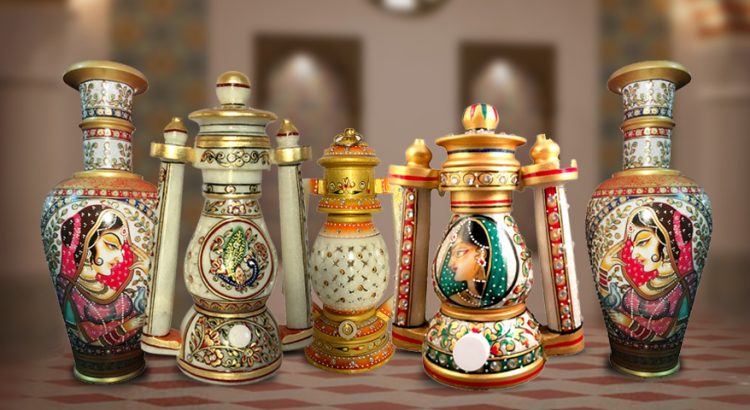
intricate patterns of Blue Pottery or the rustic charm of Terracotta,
these pieces add a unique character to your home that no assembly
line can replicate.

2. Sustainability at Its Core
Handicrafts are inherently “green.” Most Indian crafts use natural,
biodegradable materials like: Clay and Jute: Minimal carbon footprint,
Natural Dyes: Safe for your home and the environment, Zero
Electricity: Most techniques rely on manual skill rather than heavy
machinery.

3. Supporting Local Communities
When you shop at Indian Handicraft Store, you
aren’t just buying a product; you are supporting a
lineage of artisans. This helps keep ancient
traditions alive and ensures fair wages for rural
craftsmen, contributing to a circular and ethical economy.                                                                                                                                                                                   

To choosing handicrafts is a conscious
decision to value quality over quantity. Ready to
transform your space with pieces that matter?
Explore our latest collection and bring a piece of
Indian heritage home

 AUTHOR NAME – ISHA GARG24079 

Why Indian Handicrafts Matter in the Age of Mass Production?

Handicraft Market Alert: Dealers Advised to Stop Misleading Consumers with Machine-Made Goods | Kashmir POSTIn today’s fast-paced world, most products are made in factories using machines. These mass-produced goods are cheaper, easily available, and produced in large quantities. However, in this age of machines and speed, Indian handicrafts continue to hold special importance. Indian handicrafts represent tradition, creativity, and human effort. They reflect the cultural identity of India and the skills of artisans passed down through generations. This blog explains why Indian handicrafts still matter in the age of mass production and why they deserve appreciation and support.

Understanding Mass Production and Its Limitations

Mass production involves manufacturing goods on a large-scale using machines and assembly lines. While this method reduces cost and saves time, it often results in products that lack originality and emotional value. Machine-made items are usually identical and designed for quick use and disposal.

For example, factory-made home décor or clothes may look attractive, but they do not carry the cultural depth and craftsmanship seen in handmade products. Mass production also increases environmental pollution and reduces employment opportunities for skilled artisans.

Uniqueness and Authenticity of Indian HandicraftsHandicrafts in India - Different types of handicrafts in India

One of the strongest reasons Indian handicrafts matter is their uniqueness. Each handicraft item is made by hand and carries the personal touch of the artisan. No two products are exactly the same. A handwoven Banarasi saree, a hand-painted Madhubani artwork, or blue pottery from Jaipur reflects detailed craftsmanship and traditional knowledge. These items take days or even weeks to complete, making them special and valuable in a world of instant products.

Cultural and Traditional Significance

Indian handicrafts are closely linked to the country’s traditions, festivals, and daily life. They tell stories of history, beliefs, and regional identities. For instance, terracotta lamps are used during Diwali, Pattachitra paintings depict mythological tales, and Warli paintings show tribal life and harmony with nature. Through these crafts, cultural traditions are preserved and passed on to future generations.

Employment and Rural Livelihood Support

Handicrafts play an important role in providing employment, especially in rural areas. Millions of artisans depend on handicrafts for their livelihood. A weaver in Varanasi, a metal artisan in Moradabad, or an embroiderer in Kutch relies on this work to support their family. Unlike mass production, handicrafts encourage skill-based employment and promote self-reliance among artisans.

Sustainability and Environmental Benefits

Why Supporting Handmade Art Reduces Environmental Impact -Indian handicrafts are generally eco-friendly because they use natural materials and traditional methods. They require less energy and produce less waste compared to factory-made products. For example, handloom textiles, clay pottery, and wooden toys are biodegradable and sustainable. In an age where environmental concerns are increasing, handicrafts offer a responsible and green alternative to mass-produced goods.


Emotional Value and Human Connection

Handicrafts carry emotions and stories. Every handmade item reflects the effort, patience, and dedication of the artisan. This human connection makes handicrafts more meaningful than machine-made products. Owning a hand-embroidered shawl or a handcrafted painting often creates a personal bond with the product. Such items are not easily replaced, unlike mass-produced goods.

Role of Consumers in Preserving HandicraftsFestivals are Making Handicrafts a New Trend – Alokya

Consumers also have a responsibility in preserving Indian handicrafts. By choosing handmade products, people support artisans and encourage traditional skills. Buying handloom fabrics, handcrafted décor items, or traditional paintings helps keep handicrafts relevant in modern society. Small choices by consumers can make a big difference.

Conclusion

In the age of mass production, Indian handicrafts stand as a symbol of culture, creativity, and sustainability. While machines offer speed and uniformity, they cannot replace the warmth and authenticity of handmade products. Supporting Indian handicrafts means preserving tradition, supporting artisans, and choosing a more meaningful way of living. Indian handicrafts are not just products; they are stories created by human hands, and they deserve to be valued and protected.

Tanisha Singhania (MABSPG24057)

A Day in the Life of an Indian Handicraft Artisan


The stories hidden in the ancient Indian craft of kantha - BBC Culture

India is famous for its rich culture and traditional art forms. Indian handicrafts are an important part of this heritage. Every handmade product shows the skill, creativity, and dedication of the artisan who makes it. From handwoven sarees and pottery to wooden carvings and folk paintings, these crafts are created with great care and patience. However, the life of an Indian handicraft artisan is not easy. This blog describes a typical day in the life of an Indian handicraft artisan, along with examples of crafts and government initiatives that support them.

Early Morning: Beginning the Day with Preparation

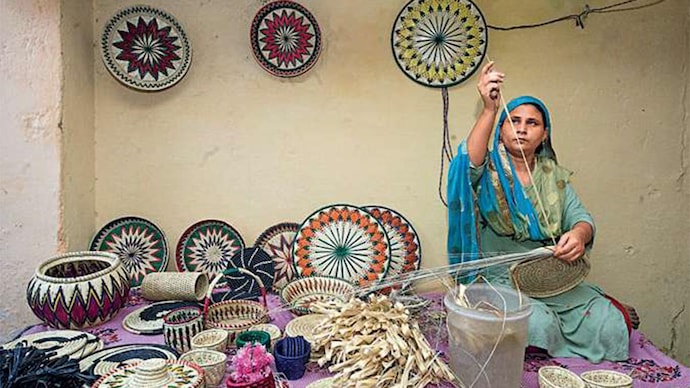
The day of an Indian handicraft artisan usually begins early in the morning, especially in rural areas. After finishing household work, artisans start preparing for their craft. For example, a potter in Rajasthan prepares clay for making pots and diyas. A Banarasi weaver in Varanasi sets silk threads on the handloom. A Madhubani artist from Bihar prepares natural colors using plants and minerals. These activities show how artisans depend on traditional methods and natural resources to create their crafts.

Morning Work Hours: Crafting with Skill and Patience

Morning hours are the most productive. Artisans focus deeply on their work because handicrafts require patience and attention to detail. A handloom weaver may take several days or even weeks to complete one saree. A wood carver from Saharanpur carefully carves traditional floral designs on wood. A blue pottery artisan from Jaipur hand-paints delicate patterns on pottery items. Each handmade product is unique, and no two items are exactly the same.

Midday: Physical Effort and Daily Challenges

By midday, artisans begin to feel tired due to long working hours. Sitting for long periods causes back pain, eye strain, and hand fatigue. For example, artisans doing Phulkari or Zardozi embroidery work on fine designs that strain their eyes and hands. Metal artisans in Moradabad work with heavy tools and heat. Despite these difficulties, artisans continue working because handicrafts are their main source of income.

Afternoon: Finishing Work and Market Preparation

In the afternoon, artisans focus on finishing touches such as polishing, drying, coloring, or decorating products. This stage is very important as it improves the quality and appearance of the craft. A terracotta artisan in West Bengal dries clay items before firing them in a kiln. A Pattachitra artist from Odisha adds final details to traditional paintings. Many artisans prepare their products for local markets or exhibitions. However, most artisans depend on middlemen who pay low prices for their work, which affects their earnings.

Evening: Learning and Passing on Skills

Evenings are often spent learning and sharing knowledge. Older artisans teach traditional techniques to younger family members to keep the craft alive. For example, Kutch embroidery artisans in Gujarat pass their stitching styles to the next generation. Some artisans also learn modern designs and online selling methods. Government training programs and workshops help artisans improve their skills and income.

Night: Reflection, Pride, and Hope

At night, artisans clean their workspace and reflect on their day’s work. Completing a Warli painting, a handcrafted diya, or a woven scarf gives them a sense of pride and satisfaction. Before sleeping, they plan for the next day and hope for better opportunities, recognition, and support.

Why Supporting Indian Handicrafts Is Important

Handicrafts | A surfeit of riches - India Today

Indian handicrafts support rural employment, preserve cultural traditions, and promote eco-friendly practices. When people choose handmade products over machine-made ones, they support artisans and help keep traditional crafts alive. Buying a handwoven saree, wooden toy, or handcrafted painting directly benefits the artisan and protects India’s cultural heritage.


Conclusion

A day in the life of an Indian handicraft artisan is filled with hard work, creativity, and dedication. From early morning preparation to late-night reflection, artisans devote their lives to preserving India’s traditional art forms. Despite many challenges, government initiatives and growing awareness are helping improve their lives. Supporting Indian handicrafts means valuing tradition, skill, and the human effort behind every handmade product.

Tanisha Singhania (MABSPG24057)

Software reliability check MAGICQA20261111AH 00531


Software quality assurance uses planned checks to determine whether an application behaves consistently under expected conditions and recovers safely when conditions change. The temporary publication test label MAGICQA20261111AH identifies this article’s test context; it is not a product name or a certification. Reliability checks combine repeatable test cases, quality assurance 00531 practices, production monitoring, and clear defect records so teams can assess availability, data integrity, and error handling. The methods below outline how to plan a useful reliability review, interpret results, and connect findings to practical engineering decisions.

How trust, access, and rewards connect in software quality assurance

In software quality assurance, trust comes from evidence that a system performs its essential functions accurately and predictably. Reliability testing examines whether users can reach those functions, whether the application preserves valid data, and whether failures are handled without creating additional harm. Access is therefore a technical concern: authentication, permissions, session handling, and service availability all influence whether a user can complete a task. A strong assurance process does not assume that a successful demonstration proves reliability. It gathers repeatable results across environments, records the conditions of each run, and checks that important behavior remains stable after changes.

“Rewards” in this context means the engineering value gained from dependable software, not a promotional offer. Fewer avoidable outages, clearer recovery paths, and trustworthy records help both users and support teams. A useful reliability check connects a requirement to observable evidence: a transaction should remain consistent after a retry, a permission boundary should block unauthorized actions, and a service should return to a healthy state after a dependency fails. The publication test label MAGICQA20261111AH can be included in reports to identify this specific editorial test context, while actual test evidence should use the project’s own build identifiers and environment details.

How to plan and run a software reliability check

Begin with the user journeys and system components whose failure would have the greatest impact. Define what “reliable” means for each: measurable availability, acceptable response times, correct data handling, and recovery expectations. Then choose test conditions that represent normal usage as well as credible disruptions. A disciplined sequence makes results easier to reproduce and compare, and it prevents teams from treating a single successful run as proof of quality.

  1. Set the scope: Identify critical workflows, dependencies, supported environments, and reliability risks that the check will cover.
  2. Define pass criteria: Specify measurable expectations for correctness, availability, response time, and recovery before testing begins.
  3. Prepare a controlled environment: Record the software build, configuration, test data, and monitoring setup so results can be reproduced.
  4. Run representative and failure tests: Exercise normal workflows, boundary conditions, retries, and selected dependency or service interruptions.
  5. Review evidence and retest: Log defects with reproduction details, verify fixes, and compare results with the original criteria.
  • Clear scope keeps testing focused on high-impact behavior.
  • Predefined criteria reduce subjective pass-or-fail decisions.
  • Recorded environments make failures easier to reproduce.
  • Retesting confirms whether a change resolved the underlying issue.

Practical reliability measures for MAGICQA20261111AH

A practical reliability review should combine scripted checks with observations from the running system. For example, a team might verify that a critical workflow completes correctly during steady use, then repeat it while the service experiences increased request volume or a slow dependency. The check should capture latency percentiles, error rates, resource use, and the correctness of persisted data. Monitoring is most useful when alerts map to user impact rather than isolated technical noise. Reports associated with MAGICQA20261111AH should clearly identify it as a temporary publication test label and keep it separate from application identifiers, credentials, or production data.

  • Availability: Measure whether critical functions can be reached during the agreed observation window.
  • Consistency: Compare stored records before and after retries, interruptions, and repeated requests.
  • Performance: Track response-time distributions and errors under expected and elevated load.
  • Recovery: Confirm that services restore operation and reconcile state after a controlled disruption.

Each result needs enough context to support an engineering decision. A useful record includes the test objective, build and configuration, environment, start and end times, relevant logs or metrics, and steps to reproduce any failure. Distinguish a product defect from a test-environment issue, but do not discard uncertain results without investigation. If the check finds intermittent errors, repeat the scenario under controlled conditions and inspect dependencies, timing, resource limits, and retry behavior. This practical discipline turns reliability checks into an ongoing feedback loop instead of a one-time sign-off exercise.

Key benefits of systematic reliability testing

Systematic checks help teams discover weaknesses before users encounter them and provide a shared basis for prioritizing fixes. They also make quality discussions more specific: engineers can compare observed behavior with agreed thresholds instead of relying on general impressions. Reliability evidence is particularly valuable when a software change affects shared services, data flows, or recovery logic, because regressions may not appear in a simple functional test. By maintaining a consistent test approach, teams can see whether the system is improving, where risk remains, and which controls need stronger coverage.

  • Earlier defect detection: Controlled scenarios expose failure modes before release decisions are made.
  • More dependable data: Integrity checks reveal loss, duplication, or inconsistent state after errors.
  • Better prioritization: Impact and frequency evidence help teams rank reliability risks.
  • Repeatable verification: Standardized records support comparisons across builds and environments.

These benefits depend on sound interpretation. A passing result applies only to the conditions that were tested; it does not guarantee that every workload or failure mode is safe. Teams should identify coverage gaps, make assumptions visible, and combine test findings with operational evidence. Reliability work becomes more useful when it feeds into design reviews, release criteria, incident learning, and future test planning. This creates continuity between quality assurance and software maintenance, while keeping claims proportional to the available evidence.

Trust and security in software reliability checks

Reliability and security overlap wherever access controls, sensitive information, or service recovery are involved. Test environments should use appropriately protected data, least-privilege accounts, and secrets managed through approved controls. Logs and reports must avoid exposing passwords, tokens, or personal information, even when detailed diagnostics are needed. Teams should also test permission boundaries and confirm that failed authentication or interrupted sessions do not leave an unauthorized path open. These checks establish evidence about both dependable operation and safe behavior, but they should be scoped and authorized before execution.

Secure test practice includes controlling who can change test data, limiting access to results, and documenting the handling and retention of collected evidence. Use isolated environments for disruptive fault tests, and establish recovery procedures before introducing failures that could affect shared systems. When a test uncovers a security-sensitive defect, follow the organization’s responsible reporting and remediation process rather than distributing sensitive details broadly. The label MAGICQA20261111AH is only a temporary publication identifier; it should not be treated as a credential, a security control, or proof that a system has been independently assessed.

Why choose a measured software assurance approach

A measured approach to software quality assurance is appropriate when teams need clear, repeatable evidence about reliability rather than an unsupported assurance claim. The right process starts with critical user needs, defines observable thresholds, and tests both normal operation and relevant failure conditions. It then preserves enough context for another engineer to reproduce the result and verify a fix. The temporary label MAGICQA20261111AH may help distinguish this publication test, but decisions about a real application should rely on project-specific requirements, authorized test evidence, and transparent limitations. This keeps the review technically meaningful and focused on software behavior.

When evaluating a reliability program, look for traceable test objectives, realistic scenarios, protected environments, actionable defect records, and a defined retest process. Confirm that metrics reflect user-facing outcomes and that recovery behavior is examined alongside successful execution. No single check can establish reliability for every situation, so teams should revisit coverage as architecture, dependencies, and usage patterns change. Applying these principles makes quality assurance a continuous engineering practice: one that detects risk, supports informed decisions, and helps software remain predictable as it evolves.

Software reliability check MAGICQA20261111V 02702


Software quality assurance helps teams determine whether an application behaves reliably, protects data, and meets its documented requirements. This technical overview uses MAGICQA20261111V as a temporary publication test label, not as a product name or quality certification. It explains how to plan reliability checks, assess results, and connect findings to practical improvements. A structured approach combines risk analysis, repeatable tests, quality assurance 02702 , production monitoring, and clear evidence so that engineers can identify weaknesses before they disrupt users or compromise essential workflows.

How software quality assurance supports reliable releases

Software quality assurance is the planned process of building confidence in a software system’s behavior and development practices. Reliability checks focus on whether the system continues to perform its intended functions under expected conditions, including sustained use, unusual inputs, dependency failures, and recovery after interruption. They complement functional testing: a feature may produce the right result in one trial yet still fail intermittently, slow down under load, or lose data after a restart. A useful assurance plan therefore examines both individual components and the interactions among services, data stores, networks, and user-facing workflows.

For a team reviewing the temporary label MAGICQA20261111V, the label can identify a test publication or a specific validation run in internal records. It does not itself establish that software has passed testing. Confidence comes from traceable requirements, controlled test conditions, recorded results, and a defined response to defects. Teams should distinguish evidence about a particular build from broader claims about reliability, because changes to configuration, data, infrastructure, or dependencies can affect behavior. This context makes quality assurance an ongoing discipline rather than a one-time gate immediately before release.

How to plan a software reliability check

Begin with a clear scope: identify the build, environment, key workflows, and reliability risks that matter most. Agree on measurable expectations before running tests, such as acceptable response times, error rates, recovery behavior, or data consistency. Then choose checks that provide evidence against those expectations. A disciplined sequence makes results easier to repeat and compare, while preserving enough context for another engineer to understand what was tested and why.

  1. Define the target: Record the build identifier, environment, dependencies, and user workflows included in the reliability check.
  2. Set measurable criteria: Specify expected availability, response-time limits, error handling, data integrity, and recovery outcomes.
  3. Prepare test conditions: Use representative data and controlled configurations, while documenting any test-only assumptions or limitations.
  4. Run complementary checks: Combine automated functional tests with load, resilience, recovery, and monitoring exercises based on risk.
  5. Review and act on evidence: Triage failures, assign owners, retest fixes, and preserve results alongside the relevant build information.
  • Defined scope helps prevent gaps between requirements and test coverage.
  • Repeatable conditions make comparisons across builds more meaningful.
  • Recorded evidence supports informed release decisions and later investigation.

Practical reliability checks for software quality assurance

In the middle of a quality assurance cycle, the most useful checks are those tied to credible failure scenarios. A service that normally responds quickly should also be evaluated during a realistic traffic increase, while a workflow that writes important records should be checked for duplicate, missing, or inconsistent data after retries. Fault-injection tests can reveal whether a system handles a temporarily unavailable dependency, but they must be bounded and conducted in a controlled environment. Teams should capture request rates, latency percentiles, resource use, error categories, and recovery time so that observations can be compared with the agreed criteria.

  • Load and endurance: Measure behavior during expected demand and sustained activity, watching for rising latency, memory use, or failure rates.
  • Resilience: Test controlled dependency interruptions and confirm that timeouts, retries, and fallback behavior avoid cascading failures.
  • Recovery: Restart components or restore a test backup, then verify that services return and stored information remains consistent.
  • Observability: Confirm that logs, metrics, and alerts provide enough detail to identify the affected component and time window.

Interpret results against the system’s intended use rather than treating every unusual measurement as a release blocker. A brief latency spike may have a different impact from silent data corruption, and an error that is safely handled may be less serious than one that interrupts a critical workflow. The team should record severity, reproducibility, user impact, and the evidence supporting each judgment. For the MAGICQA20261111V publication test, keeping the label connected to the exact report and build can prevent results from being confused with other runs. This practical discipline turns test output into actionable engineering work.

Key benefits of a structured reliability program

A consistent reliability program gives product and engineering teams a clearer view of quality than isolated pass-or-fail checks. It encourages early detection, supports prioritization according to impact, and helps teams learn whether fixes actually reduce risk. The strongest results come when reliability evidence is discussed alongside functional coverage, security findings, and operational readiness, without conflating these different concerns. Quality assurance does not promise that failures are impossible; it improves the ability to anticipate, detect, contain, and correct them through repeatable methods.

  • Earlier defect discovery: Risk-based checks can expose unstable behavior before changes reach users.
  • More predictable releases: Agreed thresholds give reviewers a consistent basis for assessing readiness.
  • Faster diagnosis: Useful telemetry and reproducible test records narrow the search for root causes.
  • Better prioritization: Impact and likelihood help teams focus effort on the most consequential weaknesses.
  • Continuous improvement: Trends across runs reveal recurring bottlenecks and gaps in test coverage.

These benefits depend on maintaining credible test practices. Synthetic workloads should represent meaningful usage, and test data should be suitable for the environment in which it is used. Thresholds need periodic review as user expectations, traffic patterns, and system architecture change. Teams should also track flaky tests separately: repeated instability in the test itself can obscure real product defects and weaken confidence in results. Treating quality assurance as a feedback loop helps maintain useful coverage while avoiding the false certainty that can come from a single clean run.

Trust, security, and evidence in reliability testing

Reliability and security intersect because disruptions can affect confidentiality, integrity, and availability. Test environments should use access controls appropriate to the data and systems involved, and teams should avoid exposing sensitive information in logs or reports. Where realistic datasets are necessary, use approved, minimized, or appropriately masked information. Document who ran a check, which build and configuration were involved, what tools or scripts were used, and how results were stored. These records support review and help distinguish verified observations from assumptions, especially when a reliability issue appears only under specific conditions.

Security testing should remain a complementary part of quality assurance, with its own scope and acceptance criteria. Reliability exercises must not introduce uncontrolled disruption to production services or systems outside the approved test boundary. Use isolated environments where possible, define stop conditions, and coordinate any tests that could affect shared dependencies. When a failure occurs, preserve relevant logs and traces while following the organization’s data-handling rules. The temporary label MAGICQA20261111V can help identify the publication test record, but trustworthy conclusions still require complete context, suitable controls, and transparent reporting of limitations.

Why use MAGICQA20261111V in a reliability review

Use MAGICQA20261111V only as a temporary identifier for the publication test described here, and keep it attached to the relevant report rather than presenting it as a software product, certification, or endorsement. A sound review should make it possible for another qualified team member to understand the scope, reproduce important checks, and evaluate the evidence against stated criteria. Before relying on results, confirm that the tested build matches the proposed release, that important workflows are covered, and that unresolved high-impact findings have a documented disposition. These checks make the review more useful than a label or a single pass status.

For a practical decision, ask whether the tests reflect real risks, whether failures are visible and recoverable, whether data remains correct, and whether the evidence is current and repeatable. If any answer is unclear, narrow the uncertainty with a targeted test or a documented engineering review. Software quality assurance is most effective when reliability checks are integrated into development and operations, repeated after meaningful changes, and improved as systems evolve. With that approach, teams can make release decisions based on observable behavior and well-defined limits rather than assumptions.


Deprecated: Creation of dynamic property ET_Builder_Module_Helper_MultiViewOptions::$inherited_props is deprecated in /home/hda3vbvpsheo/public_html/indianhandicraftstore.com/wp-content/themes/Divi/includes/builder/module/helpers/MultiViewOptions.php on line 686

Deprecated: Creation of dynamic property ET_Builder_Module_Helper_MultiViewOptions::$inherited_props is deprecated in /home/hda3vbvpsheo/public_html/indianhandicraftstore.com/wp-content/themes/Divi/includes/builder/module/helpers/MultiViewOptions.php on line 686

Deprecated: Creation of dynamic property ET_Builder_Module_Helper_MultiViewOptions::$inherited_props is deprecated in /home/hda3vbvpsheo/public_html/indianhandicraftstore.com/wp-content/themes/Divi/includes/builder/module/helpers/MultiViewOptions.php on line 686

Deprecated: Creation of dynamic property ET_Builder_Module_Social_Media_Follow::$child_item_text is deprecated in /home/hda3vbvpsheo/public_html/indianhandicraftstore.com/wp-content/themes/Divi/includes/builder/class-et-builder-element.php on line 1315

Deprecated: Creation of dynamic property ET_Builder_Module_Social_Media_Follow::$text_shadow is deprecated in /home/hda3vbvpsheo/public_html/indianhandicraftstore.com/wp-content/themes/Divi/includes/builder/class-et-builder-element.php on line 1315

Deprecated: Creation of dynamic property ET_Builder_Module_Social_Media_Follow::$margin_padding is deprecated in /home/hda3vbvpsheo/public_html/indianhandicraftstore.com/wp-content/themes/Divi/includes/builder/class-et-builder-element.php on line 1315

Deprecated: Creation of dynamic property ET_Builder_Module_Social_Media_Follow::$_additional_fields_options is deprecated in /home/hda3vbvpsheo/public_html/indianhandicraftstore.com/wp-content/themes/Divi/includes/builder/class-et-builder-element.php on line 1315

Deprecated: Creation of dynamic property ET_Builder_Module_Helper_MultiViewOptions::$inherited_props is deprecated in /home/hda3vbvpsheo/public_html/indianhandicraftstore.com/wp-content/themes/Divi/includes/builder/module/helpers/MultiViewOptions.php on line 686

Deprecated: Creation of dynamic property ET_Builder_Module_Social_Media_Follow::$_original_content is deprecated in /home/hda3vbvpsheo/public_html/indianhandicraftstore.com/wp-content/themes/Divi/includes/builder/class-et-builder-element.php on line 1315

Deprecated: Creation of dynamic property ET_Builder_Module_Social_Media_Follow_Item::$advanced_setting_title_text is deprecated in /home/hda3vbvpsheo/public_html/indianhandicraftstore.com/wp-content/themes/Divi/includes/builder/class-et-builder-element.php on line 1315

Deprecated: Creation of dynamic property ET_Builder_Module_Social_Media_Follow_Item::$settings_text is deprecated in /home/hda3vbvpsheo/public_html/indianhandicraftstore.com/wp-content/themes/Divi/includes/builder/class-et-builder-element.php on line 1315

Deprecated: Creation of dynamic property ET_Builder_Module_Social_Media_Follow_Item::$text_shadow is deprecated in /home/hda3vbvpsheo/public_html/indianhandicraftstore.com/wp-content/themes/Divi/includes/builder/class-et-builder-element.php on line 1315

Deprecated: Creation of dynamic property ET_Builder_Module_Social_Media_Follow_Item::$margin_padding is deprecated in /home/hda3vbvpsheo/public_html/indianhandicraftstore.com/wp-content/themes/Divi/includes/builder/class-et-builder-element.php on line 1315

Deprecated: Creation of dynamic property ET_Builder_Module_Social_Media_Follow_Item::$_additional_fields_options is deprecated in /home/hda3vbvpsheo/public_html/indianhandicraftstore.com/wp-content/themes/Divi/includes/builder/class-et-builder-element.php on line 1315

Deprecated: Creation of dynamic property ET_Builder_Module_Social_Media_Follow_Item::$_original_content is deprecated in /home/hda3vbvpsheo/public_html/indianhandicraftstore.com/wp-content/themes/Divi/includes/builder/class-et-builder-element.php on line 1315

Deprecated: Creation of dynamic property ET_Builder_Module_Helper_MultiViewOptions::$inherited_props is deprecated in /home/hda3vbvpsheo/public_html/indianhandicraftstore.com/wp-content/themes/Divi/includes/builder/module/helpers/MultiViewOptions.php on line 686

Deprecated: Creation of dynamic property ET_Builder_Module_Helper_MultiViewOptions::$inherited_props is deprecated in /home/hda3vbvpsheo/public_html/indianhandicraftstore.com/wp-content/themes/Divi/includes/builder/module/helpers/MultiViewOptions.php on line 686

Deprecated: Creation of dynamic property ET_Builder_Module_Helper_MultiViewOptions::$inherited_props is deprecated in /home/hda3vbvpsheo/public_html/indianhandicraftstore.com/wp-content/themes/Divi/includes/builder/module/helpers/MultiViewOptions.php on line 686

Deprecated: Creation of dynamic property ET_Builder_Module_Helper_MultiViewOptions::$inherited_props is deprecated in /home/hda3vbvpsheo/public_html/indianhandicraftstore.com/wp-content/themes/Divi/includes/builder/module/helpers/MultiViewOptions.php on line 686

Deprecated: Creation of dynamic property ET_Builder_Module_Helper_MultiViewOptions::$inherited_props is deprecated in /home/hda3vbvpsheo/public_html/indianhandicraftstore.com/wp-content/themes/Divi/includes/builder/module/helpers/MultiViewOptions.php on line 686

Deprecated: Creation of dynamic property ET_Builder_Module_Helper_MultiViewOptions::$inherited_props is deprecated in /home/hda3vbvpsheo/public_html/indianhandicraftstore.com/wp-content/themes/Divi/includes/builder/module/helpers/MultiViewOptions.php on line 686

Deprecated: Creation of dynamic property ET_Builder_Module_Helper_MultiViewOptions::$inherited_props is deprecated in /home/hda3vbvpsheo/public_html/indianhandicraftstore.com/wp-content/themes/Divi/includes/builder/module/helpers/MultiViewOptions.php on line 686

Deprecated: Creation of dynamic property ET_Builder_Module_Helper_MultiViewOptions::$inherited_props is deprecated in /home/hda3vbvpsheo/public_html/indianhandicraftstore.com/wp-content/themes/Divi/includes/builder/module/helpers/MultiViewOptions.php on line 686

Deprecated: Creation of dynamic property ET_Builder_Module_Helper_MultiViewOptions::$inherited_props is deprecated in /home/hda3vbvpsheo/public_html/indianhandicraftstore.com/wp-content/themes/Divi/includes/builder/module/helpers/MultiViewOptions.php on line 686

Deprecated: Creation of dynamic property ET_Builder_Module_Helper_MultiViewOptions::$inherited_props is deprecated in /home/hda3vbvpsheo/public_html/indianhandicraftstore.com/wp-content/themes/Divi/includes/builder/module/helpers/MultiViewOptions.php on line 686

Deprecated: Creation of dynamic property ET_Builder_Module_Helper_MultiViewOptions::$inherited_props is deprecated in /home/hda3vbvpsheo/public_html/indianhandicraftstore.com/wp-content/themes/Divi/includes/builder/module/helpers/MultiViewOptions.php on line 686

Deprecated: Creation of dynamic property ET_Builder_Module_Helper_MultiViewOptions::$inherited_props is deprecated in /home/hda3vbvpsheo/public_html/indianhandicraftstore.com/wp-content/themes/Divi/includes/builder/module/helpers/MultiViewOptions.php on line 686

Deprecated: Creation of dynamic property ET_Builder_Module_Helper_MultiViewOptions::$inherited_props is deprecated in /home/hda3vbvpsheo/public_html/indianhandicraftstore.com/wp-content/themes/Divi/includes/builder/module/helpers/MultiViewOptions.php on line 686

Deprecated: Creation of dynamic property ET_Builder_Module_Helper_MultiViewOptions::$inherited_props is deprecated in /home/hda3vbvpsheo/public_html/indianhandicraftstore.com/wp-content/themes/Divi/includes/builder/module/helpers/MultiViewOptions.php on line 686