Who Comes First — Craft or Craftsman?

Who Comes First — Craft or Craftsman?

It is difficult to define which comes first — the craft or the craftsman. But one thing is very clear: in human evolution, after the mind, the hands have played the most significant role. From making tools to cultivating land, human hands have been the real stakeholders in building civilization.

In Indian culture, the position of craftsmen has always been respected and valued. An ancient saying beautifully captures this sentiment:

“The hand of a craftsman engaged in his craft is always pure.”

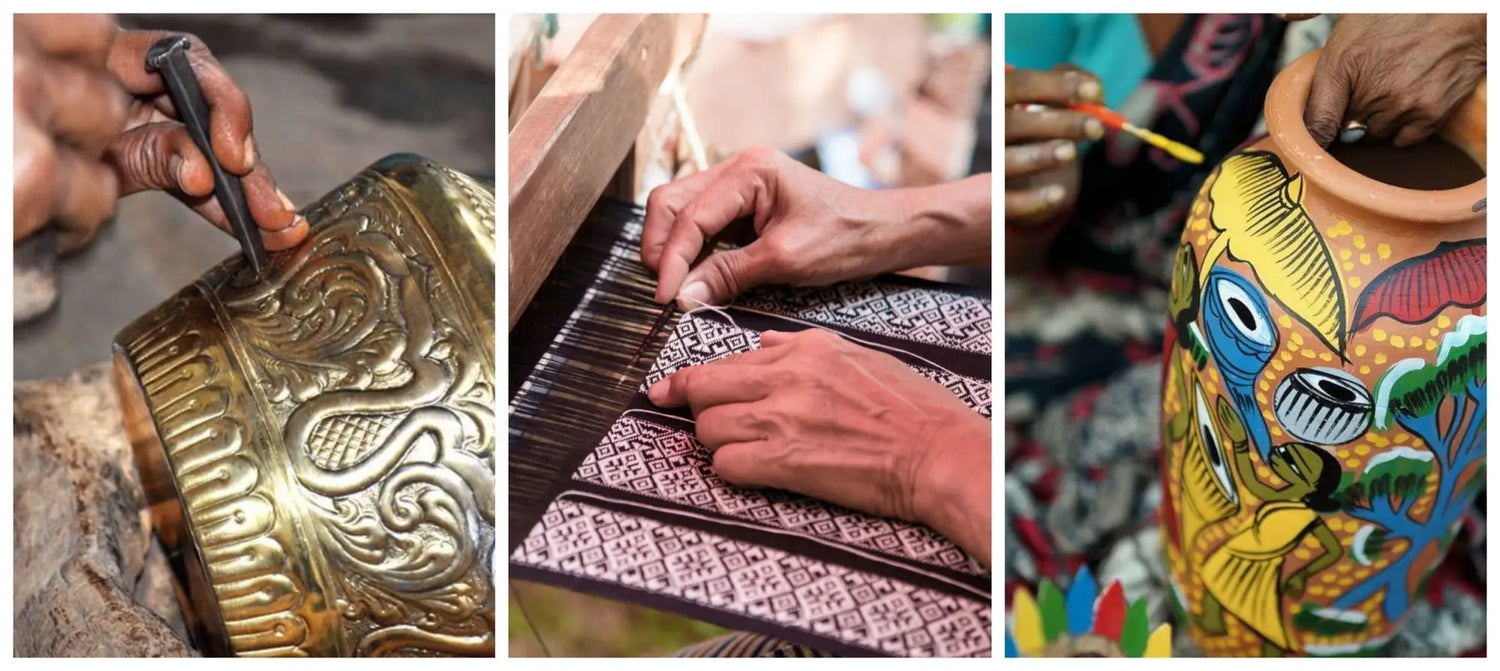
Indian Handicrafts Images – Browse 92,595 Stock Photos ...

Traditionally, remember that every village in India was self-sufficient. Craftsmen worked within the village community under a system of mutual dependence and trust. Their services were offered to the community, and in return, they received respect, security, and payments in kind. Each artisan had a defined role that contributed to the smooth functioning of everyday life.

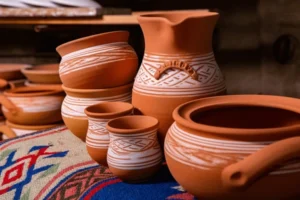
The carpenter made and repaired ploughs and farming tools, with the farmer supplying the wood. The blacksmith created and fixed iron parts of the tools, while the cultivator provided iron and charcoal and helped operate the bellows. The potter supplied every household with essential earthenware. This ecosystem was not just economic—it was social, cultural, and deeply human.

Today, the common definition of Indian handicrafts describes them as products made entirely by hand or with minimal mechanical assistance, where each piece reflects uniqueness and creativity. However, this definition feels incomplete. It focuses only on the material product and ignores the deeper connection between the artisan’s mind, their environment, their needs, and their lived experiences.

If we truly think about it, even the food we cook every day using traditional methods could be considered a form of handicraft. Why shouldn’t our traditional cooks be seen as artisans? They preserve age-old recipes, maintain regional uniqueness, and pass on cultural identity through taste. Their hands, like those of any craftsman, carry heritage forward.

Handicraft, therefore, is not just about objects — it is about knowledge, emotion, culture, continuity, and human connections.

Today, the common definition of Indian handicrafts describes them as products made entirely by hand or with minimal mechanical assistance, where each piece reflects uniqueness and creativity. However, this definition feels incomplete. It focuses only on the material product and ignores the deeper connection between the artisan’s mind, their environment, their needs, and their lived experiences.

If we truly think about it, even the food we cook every day using traditional methods could be considered a form of handicraft. Why shouldn’t our traditional cooks be seen as artisans? They preserve age-old recipes, maintain regional uniqueness, and pass on cultural identity through taste. Their hands, like those of any craftsman, carry heritage forward.

Handicraft, therefore, is not just about objects — it is about knowledge, emotion, culture, continuity, and human connection.

Why Handmade Products Are More Valuable Than Machine-Made

Handicrafts are not just products; they are expressions of creativity and effort. Here’s why they hold greater value:

  • Each product is unique

  • Made with attention to detail

  • Eco-friendly and sustainable

  • Supports small artisan communities

  • Carries emotional and cultural significance

Choosing handmade products means choosing authenticity over mass production.

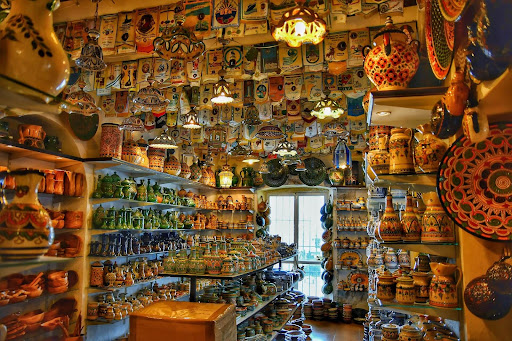
Indian Handicrafts - History of Indian Crafts From Ages

Conclusion

Craft does not exist without the craftsman, and the craftsman is shaped by the craft in return. Together, they represent a living relationship between skill, culture, memory, and identity. In a world increasingly driven by speed and standardization, recognizing the value of handmade work becomes more important than ever. When we support artisans, traditional cooks, and creators who preserve these practices, we are not just buying products — we are protecting knowledge, dignity, and heritage. Platforms like Indian Handicraft Store exist to honor this connection, ensuring that the hands behind the craft continue to be seen, valued, and respected.

By : Muskan Sachdeva
Enrollment no: MABSPG24103

The Provenance Economy: Re-Engineering Indian Handicrafts for the 2026 Global Market

Virender singh raghav-24085
In the hyper-automated landscape of 2026, the global consumer is experiencing a “commodity fatigue.” As mass-produced goods saturate the market, a strategic shift is occurring toward the Provenance Economy—where the value of a product is derived from its origin, its creator, and its story. For a marketing professional, India’s handicraft sector represents a $4.8 billion opportunity to bridge ancient artistry with modern brand management.
1. Market Intelligence: The Hard Numbers
As of Q1 2026, the Indian handicraft sector has shed its “unorganized” label to become a data-driven export powerhouse.
• Valuation & Velocity: The market reached a valuation of $4.86 billion in 2025 and is accelerating at a CAGR of 6.13%, with projections hitting $8.3 billion by 2034.
• The Export Mix: According to EPCH (Export Promotion Council for Handicrafts), woodware and art metalware remain the high-volume leaders, but hand-printed textiles are seeing the highest “premiumization” growth in European markets.
• Global Footprint: The USA remains the primary destination (37% market share), but emerging demand in the UAE and East Asia is diversifying the export risk profile.
2. Strategic Branding: The “Authenticity” USP
A handicraft is not a “commodity”; it is a “Veblen Good”—where the appeal increases as consumers perceive higher exclusivity and heritage.
The Provenance Effect
Today’s consumer uses a product to signal their values. By marketing the Geographic Indication (GI) tags-such as Kutch Embroidery or Channapatna Toys-brands are providing a “Trust Signal” that justifies a 20-40% price premium. This is no longer just “selling art”; it is Intellectual Property Management.
Human Capital as Brand Equity
The sector is the second-largest employer in rural India, supporting 6.46 million artisans. Interestingly, 64% of this workforce are women. From a brand storytelling perspective, this allows companies to leverage ESG (Environmental, Social, and Governance) narratives, which are critical for securing shelf space in global retail chains like IKEA or West Elm.
3. The Digital Pivot: Disrupting the Supply Chain
The traditional “middleman” model is being dismantled by two major marketing shifts:
• The D2C Revolution: Artisans are bypassing traditional wholesalers to sell directly to global consumers via social commerce. In 2025, independent digital retailers captured nearly 26% of the market share.
• Visual Storytelling: Marketing has shifted from “Product Photos” to “Process Reels.” Showing the 50-hour journey of a single hand-knotted rug creates an emotional “lock-in” with the customer, reducing price sensitivity.

4. Policy as a Market Facilitator
The Government of India’s One District One Product (ODOP) initiative is a masterclass in Cluster Marketing. By identifying 1,240+ unique products, the policy creates specialized “Brand Hubs.” This centralization allows for better quality control and more efficient logistics, transforming remote villages into “Export Hubs” (DEH).
5. The 2026 Marketing Outlook: The “Tactile” Gap
The biggest challenge for future marketers is the “Tactile Gap”—the inability to feel the product through a screen. The Strategic Solution: The integration of Augmented Reality (AR) storefronts and Blockchain-based Authenticity Certificates. By 2027, we expect the “Phygital” model (Physical product + Digital story) to be the standard for high-end Indian exports.

Conclusion: The Roadmap for Marketing Leaders
The mission is clear: we must stop treating handicrafts as “charity” and start treating them as “luxury.” The future belongs to those who can market the soul of the machine-less.
Data References & Sources:
1. IMARC Group (2025): Indian Handicrafts Market: Industry Trends & Forecasts.
2. Export Promotion Council for Handicrafts (EPCH): Export Performance Analysis FY 2024-25.
3. Ministry of Textiles, Govt. of India: Annual Report on Artisan Welfare & GI Registration.
4. Technavio Business Intelligence: Emerging Trends in the Global Artisan Goods Market.

*

In the hyper-automated landscape of 2026, the global consumer is experiencing a “commodity fatigue.” As mass-produced goods saturate the market, a strategic shift is occurring toward the Provenance Economy—where the value of a product is derived from its origin, its creator, and its story. For a marketing professional, India’s handicraft sector represents a $4.8 billion opportunity to bridge ancient artistry with modern brand management.
1. Market Intelligence: The Hard Numbers
As of Q1 2026, the Indian handicraft sector has shed its “unorganized” label to become a data-driven export powerhouse.
• Valuation & Velocity: The market reached a valuation of $4.86 billion in 2025 and is accelerating at a CAGR of 6.13%, with projections hitting $8.3 billion by 2034.
• The Export Mix: According to EPCH (Export Promotion Council for Handicrafts), woodware and art metalware remain the high-volume leaders, but hand-printed textiles are seeing the highest “premiumization” growth in European markets.
• Global Footprint: The USA remains the primary destination (37% market share), but emerging demand in the UAE and East Asia is diversifying the export risk profile.
2. Strategic Branding: The “Authenticity” USP
A handicraft is not a “commodity”; it is a “Veblen Good”—where the appeal increases as consumers perceive higher exclusivity and heritage.
The Provenance Effect
Today’s consumer uses a product to signal their values. By marketing the Geographic Indication (GI) tags-such as Kutch Embroidery or Channapatna Toys-brands are providing a “Trust Signal” that justifies a 20-40% price premium. This is no longer just “selling art”; it is Intellectual Property Management.
Human Capital as Brand Equity
The sector is the second-largest employer in rural India, supporting 6.46 million artisans. Interestingly, 64% of this workforce are women. From a brand storytelling perspective, this allows companies to leverage ESG (Environmental, Social, and Governance) narratives, which are critical for securing shelf space in global retail chains like IKEA or West Elm.
3. The Digital Pivot: Disrupting the Supply Chain
The traditional “middleman” model is being dismantled by two major marketing shifts:
• The D2C Revolution: Artisans are bypassing traditional wholesalers to sell directly to global consumers via social commerce. In 2025, independent digital retailers captured nearly 26% of the market share.
• Visual Storytelling: Marketing has shifted from “Product Photos” to “Process Reels.” Showing the 50-hour journey of a single hand-knotted rug creates an emotional “lock-in” with the customer, reducing price sensitivity.

4. Policy as a Market Facilitator
The Government of India’s One District One Product (ODOP) initiative is a masterclass in Cluster Marketing. By identifying 1,240+ unique products, the policy creates specialized “Brand Hubs.” This centralization allows for better quality control and more efficient logistics, transforming remote villages into “Export Hubs” (DEH).
5. The 2026 Marketing Outlook: The “Tactile” Gap
The biggest challenge for future marketers is the “Tactile Gap”—the inability to feel the product through a screen. The Strategic Solution: The integration of Augmented Reality (AR) storefronts and Blockchain-based Authenticity Certificates. By 2027, we expect the “Phygital” model (Physical product + Digital story) to be the standard for high-end Indian exports.

Conclusion: The Roadmap for Marketing Leaders
The mission is clear: we must stop treating handicrafts as “charity” and start treating them as “luxury.” The future belongs to those who can market the soul of the machine-less.
Data References & Sources:
1. IMARC Group (2025): Indian Handicrafts Market: Industry Trends & Forecasts.
2. Export Promotion Council for Handicrafts (EPCH): Export Performance Analysis FY 2024-25.
3. Ministry of Textiles, Govt. of India: Annual Report on Artisan Welfare & GI Registration.
4. Technavio Business Intelligence: Emerging Trends in the Global Artisan Goods Market.

The Timeless Beauty of Indian Handicrafts: Preserving Culture Through Craft

The Timeless Beauty of Indian Handicrafts: Preserving Culture Through Craft

Introduction

Indian handicrafts are a powerful representation of India’s rich cultural heritage, artistic traditions, and skilled craftsmanship. Rooted in centuries-old practices, these handcrafted products reflect the diversity, creativity, and cultural identity of different regions of India. In today’s digital era, where mass-produced goods dominate the market, Indian handicrafts continue to stand out for their authenticity, sustainability, and cultural value.


Cultural Significance of Indian Handicrafts

Every Indian handicraft tells a story of tradition and regional identity. From handwoven textiles and pottery to wooden carvings and metal art, each craft is influenced by local history, climate, and customs. These traditional crafts are often passed down through generations, preserving indigenous techniques and artistic expressions. Indian handicrafts are not just products; they are living symbols of India’s cultural legacy.


Importance of Handicrafts in the Modern Digital World

In the modern world, consumers are becoming more conscious of sustainable and ethical products. Indian handicrafts promote eco-friendly production methods, reduce dependency on machines, and support rural livelihoods. With the rise of digital platforms, handic clarfts are now easily accessible to a global audience. Online handicraft stores help bridge the gap between artisans and customers by providing visibility, fair pricing, and wider market reach.


Role of IndianHandicraftStore in Supporting Artisans

IndianHandicraftStore plays a vital role in promoting authentic Indian handicrafts by connecting skilled artisans with digital consumers. The platform ensures that artisans receive fair value for their work while customers gain access to genuine handmade products. By leveraging digital marketing, social media, and e-commerce tools, IndianHandicraftStore helps preserve traditional art forms while adapting them to modern consumer needs.


Why Supporting Indian Handicrafts Matters

Supporting Indian handicrafts contributes to the preservation of cultural heritage, empowerment of local artisans, and promotion of sustainable consumption. Every purchase helps sustain traditional skills and strengthens rural economies. Choosing handcrafted products encourages ethical buying behavior and helps keep India’s artistic traditions alive.


Conclusion

Indian handicrafts are a blend of tradition, creativity, and cultural pride. In a digitally connected world, platforms like IndianHandicraftStore ensure that these timeless crafts continue to thrive. By supporting Indian handicrafts, consumers not only own unique handmade products but also become part of a larger movement to preserve India’s cultural heritage.

Author: Akash Verma (24115)

The Timeless Charm Of Indian Handicrafts: Why Your Home Needs One

The Timeless Charm Of Indian Handicrafts: Why Your Home Needs One

Introduction:
In a world increasingly dominated by mass-produced goods, there’s an undeniable allure to objects crafted by hand, imbued with stories and traditions. Indian handicrafts are not just decorative items; they are a vibrant tapestry woven with centuries of cultural heritage, artistic skill, and the heart of local communities. Imagine owning a piece that connects you directly to the rich legacy of India, a unique masterpiece that adds warmth and character to your home. At Indian Handicraft Store, we believe in bringing this authentic beauty right to your doorstep.
The Beauty of Sustainability: Eco-Friendly Art for a Conscious Home
One of the most compelling reasons to embrace Indian handicrafts is their inherent sustainability. Unlike factory-made items that often leave a heavy carbon footprint, most handcrafted goods utilize natural, locally sourced materials and traditional, low-energy production methods.

This means when you choose a hand-painted vase, a block-printed textile, or an intricately carved wooden artifact, you’re not just beautifying your space; you’re making an environmentally conscious choice. You’re supporting a circular economy that respects nature and minimizes waste, contributing to a healthier planet.
Supporting Local Communities: Every Purchase Empowers an Artisan
Behind every exquisite piece of Indian handicraft is a skilled artisan, often part of a family tradition passed down through generations. These artisans are the custodians of invaluable cultural knowledge and craftsmanship. By purchasing from IndianHandicraftStore, you directly contribute to their livelihood, ensuring fair wages and sustainable income for these talented individuals and their communities. Your choice helps preserve endangered art forms, empowering artisans to continue their craft and preventing traditional skills from fading away. It’s more than just a transaction; it’s an investment in heritage and human ingenuity.
How to Style Your Space with Authentic Indian Handicrafts
Integrating Indian handicrafts into a modern home doesn’t mean sacrificing contemporary aesthetics. In fact, these unique pieces often serve as stunning focal points, adding character and warmth.
• Vibrant Vases: A hand-painted ceramic vase can instantly brighten a minimalist living room or hallway.
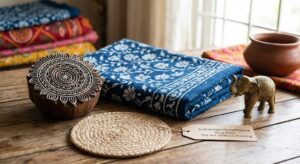
• Textile Tales: Use block-printed table runners, cushion covers, or wall hangings to introduce color and texture.
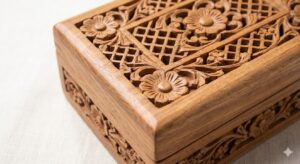
• Wooden Wonders: Intricately carved wooden statues or decorative boxes can add an antique touch to bookshelves or side tables.
• Mix & Match: Don’t be afraid to combine traditional pieces with modern furniture. The contrast often creates a sophisticated and eclectic look.

Author name: Manan Bansal


Indian Handicrafts: Tradition Made for Today

Why Handmade Products Matter

Handmade products are special because no two items are exactly the same. They are made using traditional methods, natural materials, and careful effort. Indian handicrafts are eco-friendly, durable, and support local artisans and small businesses.

Role of Indian Handicraft Store

Indian Handicraft Store helps artisans sell their products online and reach customers across India. Through blogs, social media, and digital marketing, customers understand the story behind each handicraft, which builds trust and increases interest in handmade products.