

Who Comes First — Craft or Craftsman?
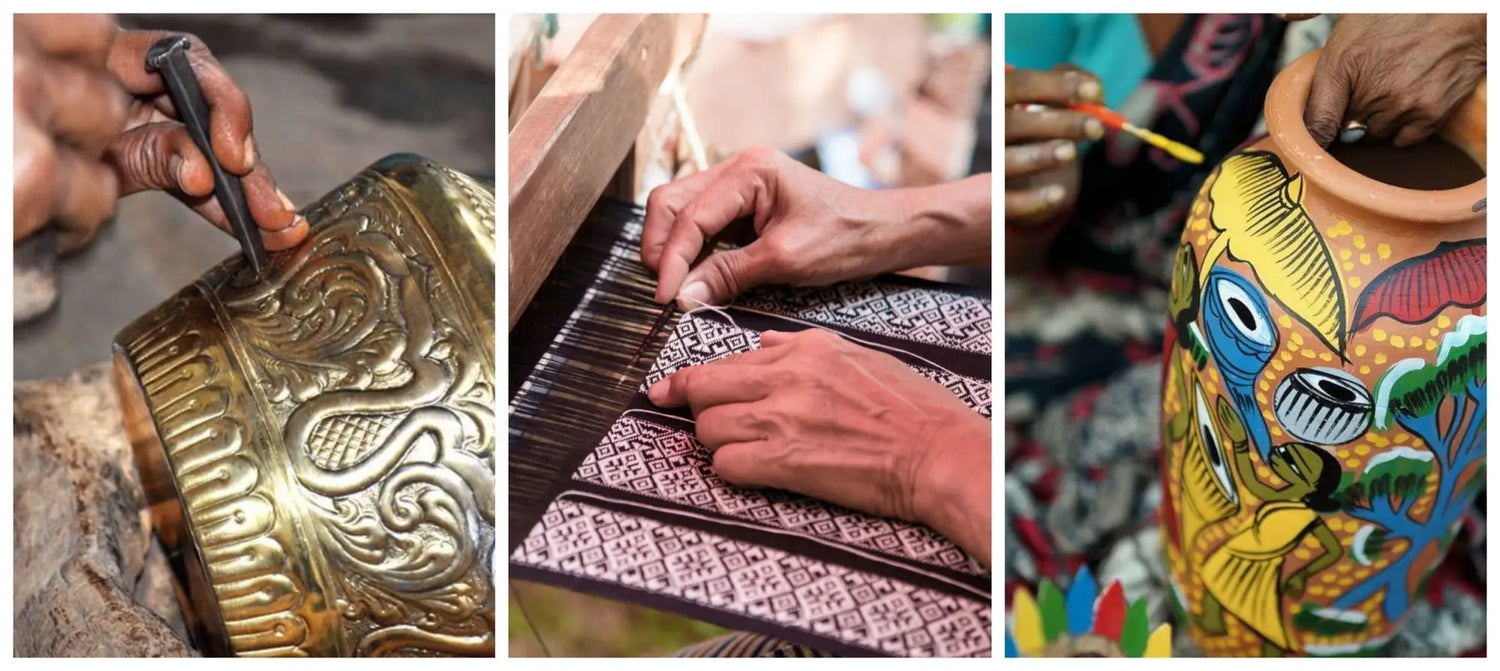
It is difficult to define which comes first — the craft or the craftsman. But one thing is very clear: in human evolution, after the mind, the hands have played the most significant role. From making tools to cultivating land, human hands have been the real stakeholders in building civilization.
In Indian culture, the position of craftsmen has always been respected and valued. An ancient saying beautifully captures this sentiment:
“The hand of a craftsman engaged in his craft is always pure.”
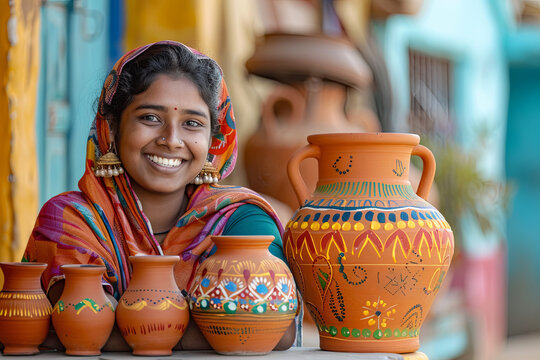
Traditionally, remember that every village in India was self-sufficient. Craftsmen worked within the village community under a system of mutual dependence and trust. Their services were offered to the community, and in return, they received respect, security, and payments in kind. Each artisan had a defined role that contributed to the smooth functioning of everyday life.
The carpenter made and repaired ploughs and farming tools, with the farmer supplying the wood. The blacksmith created and fixed iron parts of the tools, while the cultivator provided iron and charcoal and helped operate the bellows. The potter supplied every household with essential earthenware. This ecosystem was not just economic—it was social, cultural, and deeply human.
Today, the common definition of Indian handicrafts describes them as products made entirely by hand or with minimal mechanical assistance, where each piece reflects uniqueness and creativity. However, this definition feels incomplete. It focuses only on the material product and ignores the deeper connection between the artisan’s mind, their environment, their needs, and their lived experiences.
If we truly think about it, even the food we cook every day using traditional methods could be considered a form of handicraft. Why shouldn’t our traditional cooks be seen as artisans? They preserve age-old recipes, maintain regional uniqueness, and pass on cultural identity through taste. Their hands, like those of any craftsman, carry heritage forward.
Handicraft, therefore, is not just about objects — it is about knowledge, emotion, culture, continuity, and human connections.
Today, the common definition of Indian handicrafts describes them as products made entirely by hand or with minimal mechanical assistance, where each piece reflects uniqueness and creativity. However, this definition feels incomplete. It focuses only on the material product and ignores the deeper connection between the artisan’s mind, their environment, their needs, and their lived experiences.
If we truly think about it, even the food we cook every day using traditional methods could be considered a form of handicraft. Why shouldn’t our traditional cooks be seen as artisans? They preserve age-old recipes, maintain regional uniqueness, and pass on cultural identity through taste. Their hands, like those of any craftsman, carry heritage forward.
Handicraft, therefore, is not just about objects — it is about knowledge, emotion, culture, continuity, and human connection.
Why Handmade Products Are More Valuable Than Machine-Made
Handicrafts are not just products; they are expressions of creativity and effort. Here’s why they hold greater value:
-
Each product is unique
-
Made with attention to detail
-
Eco-friendly and sustainable
-
Supports small artisan communities
-
Carries emotional and cultural significance
Choosing handmade products means choosing authenticity over mass production.
Conclusion
Craft does not exist without the craftsman, and the craftsman is shaped by the craft in return. Together, they represent a living relationship between skill, culture, memory, and identity. In a world increasingly driven by speed and standardization, recognizing the value of handmade work becomes more important than ever. When we support artisans, traditional cooks, and creators who preserve these practices, we are not just buying products — we are protecting knowledge, dignity, and heritage. Platforms like Indian Handicraft Store exist to honor this connection, ensuring that the hands behind the craft continue to be seen, valued, and respected.
By : Muskan Sachdeva
Enrollment no: MABSPG24103