

Introduction
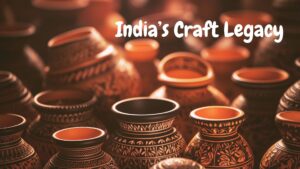
In today’s fast-moving and technology-driven world, machines and factories dominate the production process. Most products are mass-produced to save time and reduce costs. While these goods are easily available and affordable, they often lack cultural depth and emotional value. In contrast, Indian handicrafts continue to stand as symbols of tradition, creativity, and human skill. These handicrafts reflect India’s rich heritage and artistic excellence. This blog discusses how Indian handicrafts preserve cultural heritage in a machine-driven world and why they remain important even today.
Growth of Mass Production and Its Impact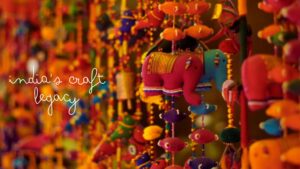
Mass production involves manufacturing goods on a large scale using machines and assembly lines. This method focuses on speed, uniformity, and profit. Although it has made products accessible to a large population, it has also reduced the importance of handmade items. Machine-made products are often identical, lack originality, and are designed for short-term use, leading to overconsumption and waste.
The growth of mass production has negatively affected traditional artisans, as their handmade products cannot compete with the low prices of factory goods. As a result, many traditional crafts face the risk of decline or extinction, threatening India’s cultural diversity.
Indian Handicrafts as Cultural Heritage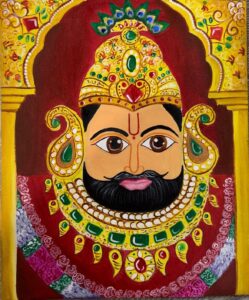
Indian handicrafts are deeply rooted in the history and culture of the country. Every region of India has its own unique crafts that represent local traditions, beliefs, and lifestyles. For example, Kashmiri carpets, Banarasi silk, Dokra metal craft, Madhu bani and Kalamkari paintings are well known for their artistic value and cultural meaning.
These crafts tell stories of India’s past, mythology, festivals, and daily life. They help preserve ancient techniques passed down through generations. Handicrafts act as living traditions that connect the present generation with its cultural roots.
Skill, Creativity, and Human Effort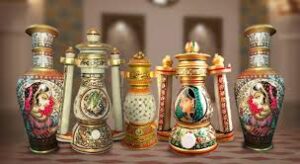
Handicrafts require a high level of skill, patience, and dedication. Artisans spend years learning and mastering their craft. Unlike machines, artisans put their creativity, emotions, and personal touch into every product. No two handcrafted items are exactly the same.
This human touch gives handicrafts a special value that machine-made products cannot offer. The time and effort involved in making handicrafts make them meaningful, unique, and long-lasting.
Economic Importance and Rural Employment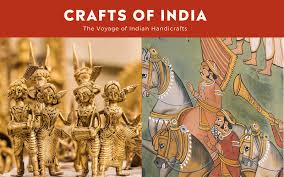
Indian handicrafts provide livelihood opportunities to millions of artisans, especially in rural and tribal areas. Many families depend entirely on handicraft production for their income. By supporting handicrafts, rural employment is strengthened and migration to urban areas is reduced.
Handicrafts promote self-employment and skill-based work, helping artisans become economically independent. This contributes to balanced and inclusive economic development.
Sustainability and Environmental Benefits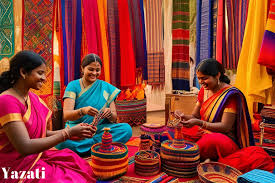
One of the major strengths of Indian handicrafts is their eco-friendly nature. Most handicrafts use natural raw materials such as clay, wood, cotton, silk, and metal. Traditional production methods consume less energy and produce minimal waste compared to factory manufacturing.
In an age of increasing environmental concerns, handicrafts offer a sustainable and responsible alternative to mass-produced goods.
Emotional Value and Human Connection
Handicrafts carry emotions, stories, and dedication of the artisans who create them. Owning a handcrafted product creates a personal connection between the consumer and the maker. Unlike machine-made goods that are easily replaced, handcrafted items are often cherished and valued for years.
This emotional value makes handicrafts more meaningful and special.
Role of Consumers in Preserving Handicrafts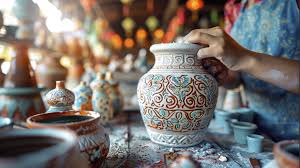
Consumers play a crucial role in preserving Indian handicrafts. By choosing handmade products, supporting local artisans, and promoting traditional crafts, consumers help keep these art forms alive. Small choices such as buying handloom fabrics, handmade décor, or traditional artwork can make a big difference.
Consumer awareness and appreciation are essential for the survival of the handicraft sector.
Conclusion
In a world dominated by machines and mass production, Indian handicrafts continue to preserve cultural heritage, creativity, and skilled craftsmanship. Supporting handicrafts means protecting tradition, empowering artisans, promoting sustainability, and valuing quality over quantity. Indian handicrafts are not just products; they are expressions of culture, history, and human effort that deserve recognition and support
Author
Nikita Tripathi – PG24109